Turkish Food & Restaurant Guide: 50 Questions Answered for European Tourists
The Ultimate Turkish Food & Restaurant Guide
Are you worried about spicy food, stomach bugs, or tourist trap prices? Turkish cuisine is one of the richest in the world, and we want you to experience it like a local. Here are the top 50 questions answered to help you navigate restaurants, avoid scams, and discover the best flavors in Kuşadası.
Q1: Is Turkish food very spicy?
A: Generally, no. Aegean and Turkish cuisine focuses on fresh ingredients, olive oil, and herbs rather than intense heat. If a dish is spicy (like Adana Kebab), it will usually be marked as 'Acılı' (with chili).
Q2: What is a 'Meze' and how do I eat it?
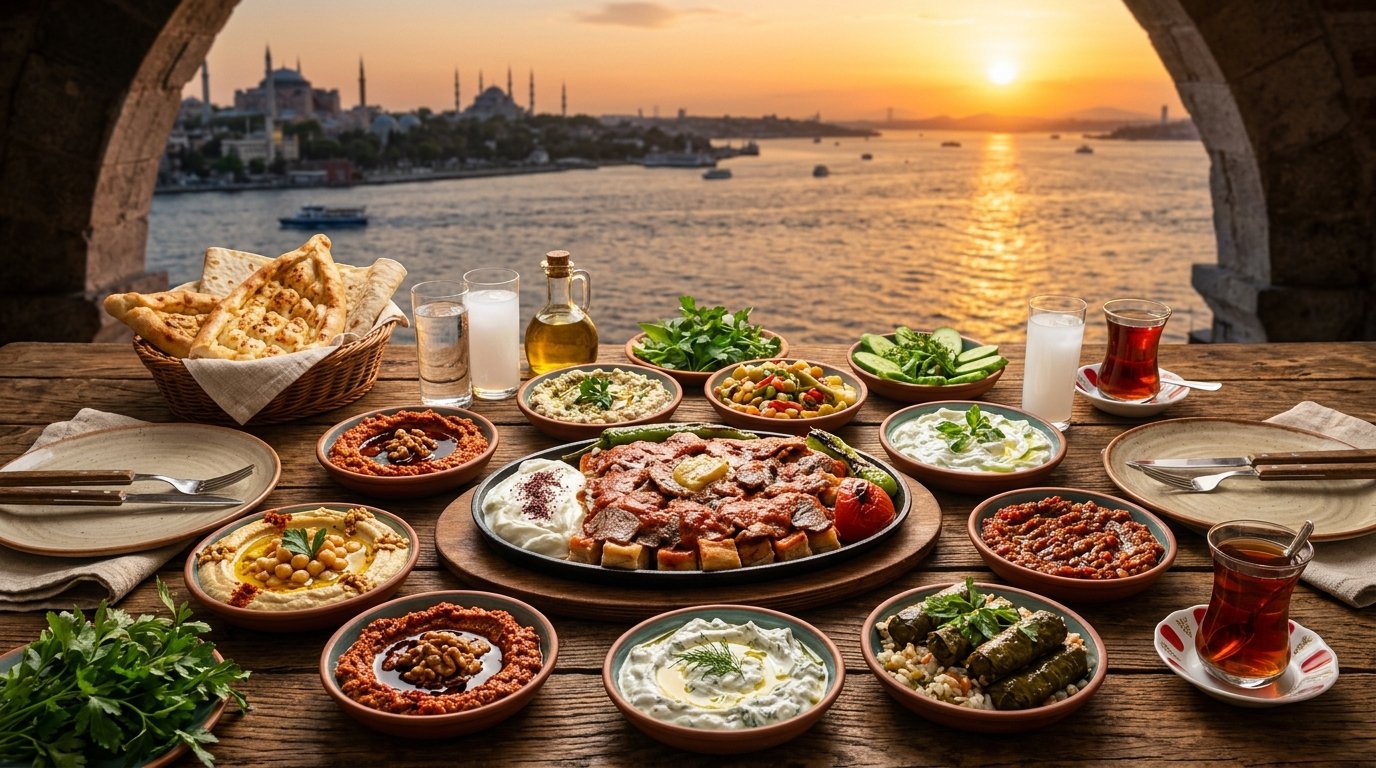
A: Mezes are small, shareable appetizers, similar to Spanish tapas. They are meant to be eaten slowly, often accompanied by fresh bread and Rakı or wine, before the main course arrives.
Q3: What is the difference between Döner and Kebab?
A: Döner is meat cooked on a vertical rotisserie, often shaved into wraps or sandwiches. Kebab is a broader term for various grilled meats, usually served on a plate with rice, bread, and grilled vegetables.
Q4: Is tap water safe to drink in restaurants?
A: While locals might drink it, tourists should always ask for bottled water (Şişe Su) to avoid any stomach upsets. It is very cheap and always served sealed.
Q5: What is 'Iskender Kebab'?
A: It's a legendary dish: thin slices of Döner meat laid over pieces of pita bread, drenched in hot tomato sauce, and generously slathered with melted butter, served with yogurt. It's a must-try!
Q6: Do Turks eat pork?
A: No, as a predominantly Muslim country, pork is rarely found. Turkish cuisine excels in lamb, beef, chicken, and incredible seafood.
Q7: What are the best vegetarian dishes in Turkey?
A: Turkey is a vegetarian paradise! Try 'Zeytinyağlılar' (vegetables cooked in olive oil), 'Mücver' (zucchini fritters), 'Sigara Böreği' (cheese pastries), and countless fresh mezes.
Q8: What is 'Pide'?
A: Pide is often called 'Turkish Pizza'. It's a boat-shaped flatbread baked in a wood-fired oven, topped with cheese, minced meat, or vegetables. It's delicious and very affordable.
Q9: Is street food safe to eat in Kuşadası?
A: Yes, street food like Midye Dolma (stuffed mussels), Simit (sesame rings), and Kumpir (stuffed baked potatoes) are generally very safe and incredibly tasty. Look for stalls where locals are eating.
Q10: What is traditional Turkish Coffee like?
A: It is strong, thick, and unfiltered. The grounds settle at the bottom of the tiny cup, so don't drink the last sip! It is meant to be sipped slowly after a meal.
Q11: Do I need to tip in restaurants?
A: Yes, a 10% tip is standard in restaurants. If the service was exceptional, 15% is greatly appreciated. Leave it in cash on the table, as you often cannot add a tip via credit card.
Q12: Are prices fixed, or do I negotiate in restaurants?
A: In restaurants, prices are strictly fixed. You do not negotiate for food. Always ensure the restaurant has a printed menu with clear prices before ordering.
Q13: How do I ask for the bill?
A: You can say 'Hesap lütfen' (Heh-sahp loot-fen) or simply make a writing motion in the air with your hands. The waiter will bring the bill to your table.
Q14: Is it rude to leave food on my plate?
A: It is not considered rude, but Turkish portions are often large, so ordering slowly and sharing is a great strategy to avoid waste.
Q15: Do restaurants serve alcohol?
A: Almost all restaurants in Kuşadası, especially along the marina and tourist areas, serve alcohol, including beer, wine, and Rakı.
Q16: What is 'Rakı'?
A: Rakı is the national anise-flavored alcoholic drink, similar to Ouzo. It turns cloudy white when water is added. It is traditionally sipped slowly alongside fish and mezes.
Q17: Why did the waiter bring food I didn't order?
A: Often, restaurants bring a 'Kuver' (cover) which includes fresh bread, butter, and perhaps a small dip. This is standard, and a small cover charge is usually added to the bill.
Q18: What time do people eat dinner in Turkey?
A: Turks eat late. Dinner usually starts around 8:00 PM or 9:00 PM, especially in the summer. If you eat at 6:30 PM, the restaurant will be very quiet.
Q19: Is it okay for kids to run around in restaurants?
A: Turkish culture is extremely family-friendly. It is very common and completely acceptable for children to be active and welcomed warmly by restaurant staff.
Q20: Can I smoke in a restaurant?
A: Smoking is banned in enclosed indoor areas, but almost all restaurants in Kuşadası have outdoor terraces or open-air seating where smoking is very common.
Q21: How can I avoid 'tourist trap' restaurants?
A: Avoid restaurants with aggressive touts pulling you in from the street, and never eat at a place that doesn't display a menu with clearly marked prices outside.
Q22: Are the fish restaurants at the Marina expensive?
A: Yes, the Marina area offers premium dining with spectacular views, so prices are higher. However, the quality of fresh seafood is exceptional.
Q23: How do I know if the seafood is fresh?
A: In reputable fish restaurants, you can walk up to the display case on ice and select your exact fish before it is cooked. The eyes should be clear, and the gills bright red.
Q24: What is the 'Catch of the Day' scam?
A: Sometimes, a waiter will recommend a fish off-menu without stating the price, which is sold by weight. Always ask 'How much per kilo?' and 'How much will this specific fish cost?' before agreeing.
Q25: Where do the locals eat in Kuşadası?
A: Locals eat in 'Lokantas' or 'Esnaf Lokantası' (tradesmen restaurants) located in the backstreets away from the seafront. They serve incredible home-style stews and kebabs at very low prices.
Q26: Is it safe to eat at a buffet?
A: Yes, but in large resorts, ensure the hot food is kept piping hot. In town, fresh, made-to-order food is always a better and safer culinary experience than a buffet.
Q27: What is 'Ayran'?
A: Ayran is a refreshing, salty yogurt drink. It sounds unusual to Europeans, but it is incredibly cooling in the summer heat and pairs perfectly with a heavy kebab.
Q28: Can I get a good pizza or burger in Kuşadası?
A: Absolutely. While we recommend trying local cuisine, Kuşadası has many excellent international restaurants, steakhouses, and Italian pizzerias to satisfy all cravings.
Q29: Why is the waiter standing so close while I eat?
A: In Turkey, attentive service means the waiter is always watching to clear your plate instantly or top up your drink. It is a sign of good service, not impatience.
Q30: How can my Local Assistant help with dining?
A: We know the absolute best hidden gems. We can make VIP reservations for you, translate menus, and ensure you are given 'local' treatment rather than the typical tourist treatment.
Q31: What is 'Serpme Kahvaltı'?
A: It is the famous Turkish 'Spread Breakfast'. Your table will be entirely covered with small dishes of cheeses, olives, jams, honey, clotted cream, eggs, tomatoes, and unlimited tea. It is an event!
Q32: What is 'Menemen'?
A: Menemen is a delicious traditional breakfast dish made of eggs gently scrambled with fresh tomatoes, green peppers, and olive oil, served in a hot copper pan.
Q33: Is Turkish Delight (Lokum) actually good?
A: Real, fresh Turkish Delight is incredible, soft, and flavored with pistachios, rose, or pomegranate. Avoid the cheap, pre-packaged boxes in supermarkets; buy it fresh from a specialized sweet shop.
Q34: What is the best dessert to try?
A: Baklava is the king of Turkish desserts. Layers of thin pastry, filled with pistachios or walnuts, and sweetened with syrup. Eat it fresh with a scoop of Maraş ice cream.
Q35: What is 'Maraş Dondurması' (Turkish Ice Cream)?
A: It is a unique, chewy, and melt-resistant ice cream made with salep root. Buying it from a street vendor is a fun experience as they perform a playful trick show before handing it to you.
Q36: Is it normal to drink tea all day?
A: Yes! Turkish black tea (Çay) served in small tulip-shaped glasses is the fuel of the nation. It is consumed morning, noon, and night.
Q37: Do they serve English Breakfast in Kuşadası?
A: Yes, almost every restaurant catering to tourists will offer a full English or Irish breakfast, complete with bacon and beans.
Q38: What is 'Künefe'?
A: Künefe is a warm, heavenly dessert made of crispy shredded pastry filled with melted sweet cheese, soaked in syrup, and topped with pistachios. It must be eaten hot!
Q39: Can I find good bakery items?
A: Turkish bakeries (Fırın) are amazing. Try a 'Poğaça' (savory pastry with cheese or potato) or a 'Boyoz' (a flaky pastry famous in the Izmir region) for a quick, cheap morning snack.
Q40: Where can I find the best desserts?
A: Instead of ordering dessert at the dinner restaurant, locals usually move to a dedicated 'Pastane' (patisserie) or cafe for dessert and coffee after their meal.
Q41: Is it easy to eat gluten-free in Turkey?
A: It can be challenging as bread is central to the diet, but many meals like grilled meats, salads, and vegetable mezes are naturally gluten-free. Just say 'Glutensiz' (Gloo-ten-seez).
Q42: How are food allergies handled?
A: Awareness of severe allergies (like peanut) is lower than in Northern Europe. If you have a severe allergy, ask your Local Assistant to write a clear warning card in Turkish for you to show the chef.
Q43: Are restaurant toilets clean?
A: Yes, the vast majority of restaurants maintain very high hygiene standards in their restrooms. You may encounter 'squat' toilets in very rural areas, but in Kuşadası, they are Western-style.
Q44: Is it safe to eat salad and fresh fruit?
A: Yes, restaurants in tourist areas wash their produce thoroughly. The fresh tomatoes and cucumbers in Turkey are some of the most flavorful in the world.
Q45: Should I avoid ice in my drinks?
A: In reputable restaurants, bars, and hotels in Kuşadası, ice is made from purified commercial water and is perfectly safe to consume.
Q46: What is the hygiene rating system?
A: While there isn't a public 'A/B/C' rating on the door like in some countries, local municipalities conduct strict health inspections, especially during the tourist season.
Q47: What if I get food poisoning?
A: It is rare, but if it happens, pharmacies (Eczane) are highly equipped to give you effective over-the-counter remedies. For anything severe, your Local Assistant will arrange immediate medical care.
Q48: Is Halal meat standard?
A: Yes, Turkey is a Muslim country, so all meat served in restaurants and sold in supermarkets is strictly Halal by default.
Q49: Are stray cats allowed in restaurants?
A: You will often see friendly cats weaving around tables in outdoor restaurants. Locals feed them, and they are part of the charm. If you don't like them, gently shoo them away.
Q50: Can my Local Assistant curate a food tour for me?
A: Absolutely. We can design a personalized culinary journey, taking you from the best hidden breakfast spots to the most authentic local kebab houses, ensuring an unforgettable gastronomic holiday.
Ready to eat like a true VIP Local?
Don't risk your holiday dinners on tourist traps. Let your 24/7 Local Assistant secure the best tables at the most authentic hidden gem restaurants.
Reserve Your VIP Tables Now (+90 552 845 35 35)